
The Old Ways: Tracing the Roots of Toudi -Jutsu and Goju Ryu
When we speak of returning to “the old ways” at New York City Goju-Ryu Karate-Jutsu, we are not suggesting that Goju-Ryu has existed unchanged for hundreds or thousands of years. Goju-Ryu, as we know it today, is an Okinawan martial art shaped and formally named by Chojun Miyagi during the twentieth century. The methods from which it developed, however, are considerably older. Following those methods backward takes us through Miyagi’s teacher, Kanryo Higaonna, across the East China Sea to southern China, and eventually into a period where written documentation becomes scarce and oral tradition becomes an essential part of the story.

Ryu Ryu Ko
Chinese Martial Arts Master and Teacher of Kanryo Higaonna

Kanryo Higaonna
March 10, 1853 - October 1915
Master of Naha-Te and Teacher of Chojun Miyagi

Chojun Miyagi
April 25, 1888 - October 8, 1953
Founder of Goju Ryu - Student of Kanryo Higaonna - Teacher of An'ichi Miyagi
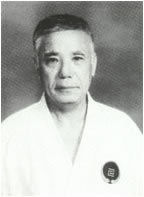
An'ichi Miyagi
February 9, 1931 - April 27, 2009
Master of Goju Ryu - Student of Chojun Miyagi - Teacher of Morio Higaonna


Jin'an Shinzato
February 5, 1901 - March 31, 1945
Senior Student of Chojun Miyagi
Important Figure in the Naming and Early History of Goju Ryu
Morio Higaonna
Born December 25, 1938
10th Dan - Master of Okinawan Goju Ryu - Student of An'ichi Miyagi
Founder of IOGKF - Founder and World Chief Instructor of TOGKF
World-Renowned Authority on Traditional Okinawan Goju Ryu
This older tradition is important to understanding what we mean by Toudi-jutsu. Before the modern name “karate” became established, Okinawan fighting traditions were commonly associated with terms such as Te or Ti, meaning “hand,” and Toudi, historically written in a way that carried the meaning of “China Hand” or “Tang Hand.” Okinawa was not culturally isolated. For centuries, the Ryukyu Kingdom maintained extensive commercial and cultural relationships with China, and Chinese fighting methods became one of the influences upon the development of Okinawan martial arts.
There was no single moment when Toudi suddenly appeared, no known individual who can responsibly be called its founder, and no surviving historical record that permits us to trace every technique or kata to its original source. Toudi-jutsu should therefore not be imagined as one ancient, standardized style possessing a single curriculum. When we use the term in our dojo, we are referring to the older fighting methodology underlying the Chinese-influenced Okinawan tradition: striking, seizing, controlling, unbalancing, throwing, joint manipulation, close-range fighting, conditioning of the body, breathing, and the development of power through coordinated movement. These methods were preserved in large part through kata and through direct instruction from teacher to student.
This distinction is important. We teach Goju-Ryu. Toudi-jutsu is not being presented as a replacement for Goju-Ryu or as a separate modern style that we have invented. Rather, when we speak of the Toudijutsu within our Goju-Ryu, we are looking beneath the modern name of the system and examining the older combative methodology from which it developed.
For our particular tradition, that historical journey becomes much clearer during the nineteenth century with Kanryo Higaonna of Naha. Higaonna traveled to Fuzhou in Fujian Province, China, where Goju-Ryu tradition identifies his principal Chinese teacher as the man remembered by the Okinawans as Ryū Ryū Ko. Precisely who Ryū Ryū Ko was remains one of the great historical mysteries surrounding Goju-Ryu. Different researchers have proposed Chinese identities for him, while oral traditions contain various accounts concerning his occupation, social position and martial background. Some traditions associate him with military or official service; others portray him as a craftsman and martial arts teacher. Where documentary evidence does not permit certainty, these stories must remain what they are—valuable pieces of an inherited oral tradition rather than proven historical fact.
Ryū Ryū Ko is nevertheless enormously important to our history. He represents approximately the furthest point to which we can presently follow the Chinese lineage behind Kanryo Higaonna. We are not claiming that Ryū Ryū Ko created Toudijutsu or created the methods that ultimately became Goju-Ryu. Whatever he taught had a history before him. He had teachers, and those teachers inherited their knowledge from somewhere else. Beyond Ryū Ryū Ko, however, the trail becomes increasingly difficult to reconstruct with confidence. In our particular lineage, he stands near the edge of what can presently be recovered about the Chinese ancestry of the art.
According to the history preserved within our Goju-Ryu tradition, Kanryo Higaonna remained in Fuzhou for approximately thirteen to fourteen years, much of that period associated with his training under Ryū Ryū Ko. The precise chronology remains a subject of historical debate, and surviving records do not allow us to establish every year of his stay with certainty. What the tradition consistently preserves, however, is that Higaonna's experience in China was extensive and profoundly formative. The demanding training he received there became the foundation of the methods he later transmitted in Okinawa and, through Chojun Miyagi, an essential part of the inheritance from which Goju-Ryu developed.
Kanryo Higaonna's experience under Ryū Ryū Ko also gives us one of the most fascinating windows into what this older method of training may have looked like. Accounts preserved within the Goju-Ryu tradition describe Higaonna assisting his teacher during the day and undertaking his martial training after dark. The training was severe and physically demanding. Sanchin occupied a central place, but training extended far beyond kata alone. Traditional conditioning implements included gripping jars, stone weights, natural stone, various resistance devices and striking equipment related to the makiwara. Published histories of the tradition describe the physical toll of this training, including Higaonna's hands, shoulders and legs becoming swollen from the intensity of the work.
These accounts matter to us for another reason. They were not simply stories rediscovered generations later on the Internet. Within our tradition, memories of the older training were passed from teacher to student. Kanryo Higaonna spoke about his experiences in China and the demanding training he had undergone under Ryū Ryū Ko. Chojun Miyagi inherited those stories along with the physical methods of the art. An'ichi Miyagi subsequently received teachings and oral accounts from Chojun Miyagi, and Morio Higaonna received the tradition from An'ichi Sensei. Morio Higaonna would eventually devote decades to researching and documenting the history of Okinawan Goju-Ryu as well as transmitting its physical training methods internationally. His published work includes The History of Karate: Okinawan Goju Ryu.
This is where oral tradition must be approached with both respect and honesty. Oral history is not the same thing as documentary evidence. Memories can change, details can be lost, and stories can develop as they travel through generations. We therefore should not present every detail of an inherited story as though a nineteenth-century document exists to prove it. At the same time, dismissing oral tradition altogether would mean ignoring one of the principal ways in which Okinawan martial arts were historically transmitted. Much of this knowledge was communicated directly through demonstration, physical correction, explanation and kuden—oral teaching.
More importantly, the transmission was not only verbal. The training itself survived.
The makiwara survived. The use of stone survived. The gripping and strengthening exercises survived. Sanchin survived. Hojo undo survived. Body conditioning survived. Kakie survived. The emphasis on close-range application survived. These practices were not preserved merely as stories about how people once trained. They continued to be practiced.
That distinction is extremely important to what we do at New York City Goju-Ryu Karate-Jutsu. When we strike stone in our dojo, work the makiwara, practice Sanchin, condition the body or use the traditional methods of hojo undo, we are not attempting to imitate something we discovered in an old photograph. We are practicing methods that have continued within the lineage through Morio Higaonna Sensei and An'ichi Miyagi Sensei, back through Chojun Miyagi and Kanryo Higaonna to the Chinese training associated in our tradition with Ryū Ryū Ko. The historical details surrounding the earliest generations may sometimes be uncertain, but the physical tradition itself has continued to be transmitted.
When Kanryo Higaonna returned to Okinawa, he brought with him methods profoundly influenced by his years of training in southern China. His teaching became strongly associated with the tradition later known as Naha-te. Among the material transmitted through Higaonna were kata, conditioning practices, breathing and body-development methods, close-range fighting principles and sophisticated methods of generating, receiving and redirecting force. His most famous students included Chojun Miyagi and Juhatsu Kyoda, both of whom would become important figures in preserving different branches of Higaonna’s martial inheritance.
We cannot demonstrate the precise Chinese birthplace of every kata associated with Higaonna. Nor can we responsibly assign every movement to a particular Chinese master, family or temple. This is another place where romantic martial arts history sometimes travels further than the evidence permits. What we can establish is that Higaonna trained in China and that his martial teaching became a foundational source for the Naha tradition from which Goju-Ryu subsequently emerged.
Among Higaonna’s students, Chojun Miyagi would become the figure most closely associated with the development of Goju-Ryu. Miyagi did far more than simply preserve his teacher’s lessons. He devoted his life to studying, organizing and developing the system. He continued investigating Chinese martial culture and lived during a period when the connection between Okinawan and Chinese martial artists had not disappeared.
One particularly interesting example was Wu Xiangui, remembered in Okinawa as Go Kenki, a Chinese martial artist from Fujian associated with White Crane boxing. His presence in Okinawa reminds us that Chinese influence upon Okinawan karate cannot necessarily be reduced to one man making one journey to China. Okinawa and southern China had interacted for centuries, and martial knowledge formed part of a much larger pattern of cultural exchange.
It was Chojun Miyagi who eventually gave his system the name Goju-Ryu—the “Hard and Soft Style.”
Jin’an Shinzato holds an important and honorable place in the history of Goju-Ryu. Although he is not a link in the direct lineage through which the teachings of NYC Goju-Ryu Karate-Jutsu have been transmitted, his importance to Chojun Miyagi Sensei and to the development of Goju-Ryu deserves recognition.
Shinzato was one of Chojun Miyagi’s most prominent senior students during the years before World War II and was exceptionally close to his teacher. Within the Goju-Ryu tradition, he has long been regarded as the student who might have carried Miyagi Sensei’s art forward had he survived the war. It is important, however, to be historically precise: Chojun Miyagi never formally named an official successor to Goju-Ryu. Therefore, we do not present Shinzato—or any other individual—as having been formally appointed by Miyagi Sensei as his successor.
Shinzato also played an important role in one of the defining moments in the history of our art—the adoption of the name Goju-Ryu. While representing Chojun Miyagi at a martial arts demonstration in mainland Japan, Shinzato was asked the name of the system he practiced. At that time, Miyagi’s art did not yet possess the formal style name by which we know it today. When Shinzato returned to Okinawa, he related the experience to his teacher. Miyagi subsequently chose the name Goju-Ryu—“Hard and Soft Style”—drawing from the principle of hard and soft expressed in the Bubishi.
Tragically, Jin’an Shinzato was lost during the Battle of Okinawa in 1945. His death deprived Chojun Miyagi of one of his most accomplished and trusted students during one of the most devastating periods in Okinawan history.
For NYC Goju-Ryu Karate-Jutsu, honoring Shinzato does not alter our lineage. Our direct line of transmission continues through Chojun Miyagi to An’ichi Miyagi and then to Morio Higaonna Sensei. We include Jin’an Shinzato here because the history of Goju-Ryu cannot be properly told without acknowledging the men who helped shape, preserve and influence the art along the way. Jin’an Shinzato was one of those men, and his contribution deserves to be remembered.
Chojun Miyagi transmitted his art to another generation, and of particular importance to our lineage was An’ichi Miyagi. An’ichi Sensei received extensive personal instruction from Chojun Miyagi and became an important source for both the technical teachings and the stories Miyagi had received concerning Kanryo Higaonna and the generations before him. Those teachings subsequently became central to the instruction of Morio Higaonna.
Morio Higaonna’s relationship with An’ichi Miyagi is particularly important to our lineage. Higaonna Sensei regarded An’ichi Miyagi as his principal teacher in Goju-Ryu and became known throughout the world for the intensity with which he preserved the traditional training methods of Okinawan Goju-Ryu. His practice emphasized Sanchin, kata, kakie, makiwara, hojo undo, conditioning and practical application, continuing the demanding approach to physical development associated with the older tradition.
It is through this line that our dojo understands its martial inheritance: Ryū Ryū Ko to Kanryo Higaonna; Kanryo Higaonna to Chojun Miyagi; Chojun Miyagi to An’ichi Miyagi; An’ichi Miyagi to Morio Higaonna; and from Higaonna Sensei forward to the tradition we practice today.
New York City Goju-Ryu Karate-Jutsu is a proud inheritor of this tradition and lineage. As the only dojo in New York State representing the TOGKF tradition, we are honored to carry forward the Goju-Ryu transmitted through Morio Higaonna Sensei and the generations of teachers who came before him.
For us, this inheritance is more than a historical association or a name displayed on a wall. It carries a responsibility to preserve, practice and transmit the principles, methods and spirit of the art as faithfully as possible. Through Sanchin, kata, kakie, makiwara, hojo undo, body conditioning, close-range application and the study of the older combative principles contained within kata, we remain connected to a living method of training passed from teacher to student across generations.
We are proud to be the only dojo to represent this remarkable tradition in New York State, and equally proud that every student of New York City Goju-Ryu Karate-Jutsu becomes part of its continuing story.
We should also recognize the limits of that statement. Before Ryū Ryū Ko there were unquestionably other teachers and older Chinese fighting traditions. We simply cannot identify all of them with historical certainty. We do not know who first created many of the kata. We cannot give Toudijutsu an exact birthday. We cannot prove every detail contained in generations of oral tradition. Where documentary evidence exists, we follow it. Where researchers disagree, we acknowledge that disagreement. Where something has been preserved through oral transmission, we identify it honestly as oral tradition. And where the answer has been lost to history, there is nothing wrong with saying, “We do not know.”
For us, that uncertainty makes the history more fascinating rather than less.
We know that fighting methods crossed the sea between China and Okinawa. We know that Kanryo Higaonna trained in China and that the tradition remembers Ryū Ryū Ko as his principal Chinese teacher. We know that Higaonna transmitted his knowledge to Chojun Miyagi. We know that Miyagi developed and named Goju-Ryu. And through the succeeding generations, we can still see and physically practice methods that characterize this older approach to training.
This is the meaning of Toudi-jutsu within our Goju-Ryu. We do not use the term to replace the name Goju-Ryu, nor do we claim to have rediscovered some lost secret style. We use it to remind ourselves to look beneath the modern name and outward appearance of karate—to the older fighting methodology in which striking, grappling, seizing, controlling, throwing, joint manipulation, conditioning, breathing, body mechanics and kata were interconnected parts of one method of self-defense.
When one of our students stands before the makiwara, works with stone, practices Sanchin, performs hojo undo, trains kakie or investigates the close-range fighting contained within kata, that student is participating in something larger than an exercise. The equipment may change. The world around the dojo may change. Generations pass away. Yet teacher by teacher, student by student, something of the old method continues.
The name of the art we practice is Goju-Ryu.
The method reaches further back.
That is what we mean when we say: